
How summer interns find housing in NYC — sublets, dorms, and coliving. Real 2026 costs, timing, and insider tips for locking down a room.
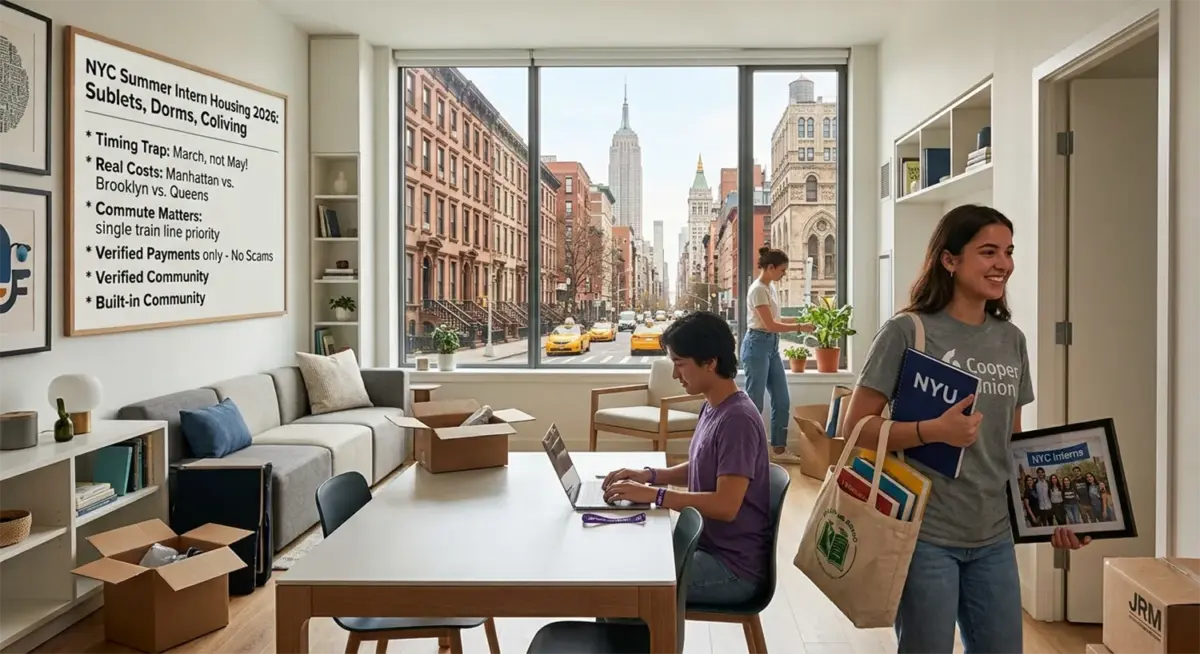
Every spring, a small army quietly assembles itself across New York City. They show up in May with a duffel bag, a laptop, and a start date, ready to spend ten weeks at a bank, a magazine, a startup, or a law firm.
The internship is the part everyone plans for. The part almost no one plans for – the part that quietly decides whether the summer is magic or misery – is where they’re going to sleep.
Behind every polished LinkedIn post about a “dream summer in the city” is a frantic, weeks-long scramble to find a room. Here’s how that scramble actually plays out, and how the people who do it well pull it off.
The Summer Housing Crunch Nobody Warns Interns About
The cruel irony of intern housing is that everyone needs it at exactly the same moment. Tens of thousands of summer interns, grad students, and first-year associates all descend on the same city in the same two-week window, which does to the short-term rental market exactly what you’d expect.
According to a 2026 summer sublet guide, prices spike in May and June precisely because demand from summer interns and associates peaks, and units posted in late May can run 10 to 15% more than the same listings put up in March.
That timing trap is the single biggest mistake first-time interns make. They wait until they’ve accepted the offer, signed the paperwork, and told their parents – and only then start looking, in mid-May, at the most expensive and most picked-over moment of the year. The interns who land the good rooms started in March.
The Four Ways Interns Actually Find a Place
Strip away the chaos and almost every intern ends up in one of four lanes. Knowing them in advance is half the battle.
1. University Summer Housing
The default for a lot of interns is a dorm room. Schools across the city open their residence halls to visiting students and interns for the summer, and the appeal is obvious: it’s furnished, it’s safe, and there’s no lease drama. The catch is cost and availability.
Cooper Union, for example, charges $6,105 per occupant for its 11-week 2026 summer term – not exactly cheap for a shared room. And the popular options fill up fast: NYU’s summer housing stopped taking new reservations well before the season even began.
Dorms are reliable, but they reward the early and punish the late.
2. The Summer Sublet
The classic move is taking over someone’s lease while they’re away. Most summer sublets run 8 to 16 weeks, are furnished, skip the broker fee, and line up neatly with an internship calendar. They’re also a minefield of scams, no-shows, and apartments that look nothing like the photos.
A sublet can be the best deal in the city or the worst decision of your summer, and the difference usually comes down to how carefully you verify before you pay.
3. Coliving and Furnished Rooms
The newest lane – and the one growing fastest – is purpose-built shared housing. Instead of gambling on a stranger’s sublet, interns increasingly book a private room in a professionally managed apartment where utilities, Wi-Fi, and furniture are bundled into one monthly payment.
Services offering furnished housing for interns have built their whole model around the summer calendar: flexible terms that match a ten-week stint, a move-in-ready room, and built-in roommates who are often interns too.
For someone landing in a city where they know no one, that last part matters more than the listing photos suggest.
4. The Network Hail Mary
And then there’s the oldest method of all: a group chat, a cousin’s coworker, an alum two years ahead who’s subletting their room. It works beautifully when it works and leaves you with nothing when it doesn’t. Smart interns treat the network as a bonus, not a plan.
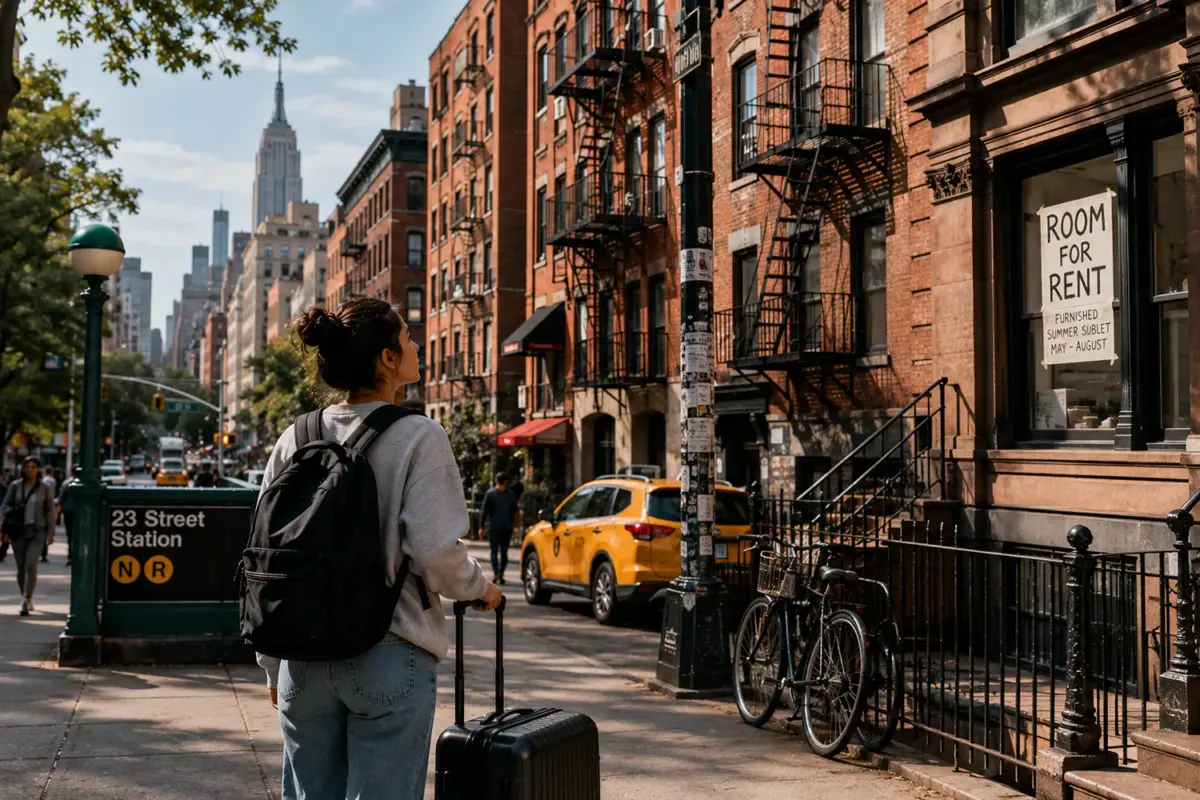
What a Summer in NYC Really Costs
Numbers cut through the fantasy fast. Summer sublet prices across the city in 2026 stretch from roughly $1,400 to $5,500-plus a month, depending on the neighborhood, the size, and whether it’s furnished. Manhattan sits at the top of that range; Brooklyn and Queens routinely run 20 to 35% cheaper for comparable space.
For an intern on a fixed stipend – or no stipend at all – that spread is the difference between a summer of savings and a summer of credit-card dread.
The hidden costs sneak up too. Furniture you’ll use for ten weeks and abandon. Utilities split unevenly with strangers. A security deposit you’ll spend August fighting to get back. This is exactly why all-in arrangements – one payment, furnished, utilities included – have become the default for interns who’d rather spend their summer working than apartment-managing.
Insider Tips for Locking Down Intern Housing
- Start in March, not May. The best rooms and lowest prices belong to the people who move early. Every week you wait, the market gets worse.
- Never wire money for a place you haven’t verified. A live video tour at minimum; if a “landlord” won’t hop on a call, walk away. Intern season is scam season.
- Match the lease to your dates. A twelve-month lease for a ten-week internship is a trap. Look for furnished, flexible, or coliving options built for short stays.
- Prioritize the commute. A cheaper room 50 minutes away can cost you more in time and sanity than a slightly pricier one near a single train line.
- Factor in the people. The best part of an NYC summer is rarely the apartment – it’s the roommates and the city. Housing that comes with a built-in community gives you a head start on both.
Where Interns Actually Cluster
Follow the interns and a map emerges. Lower Manhattan and Midtown pull the finance and law crowd who want a short walk to the office. Brooklyn neighborhoods like Bushwick, Bed-Stuy, and Crown Heights draw the interns chasing lower rent and a livelier social scene. Queens spots like Astoria and Sunnyside reward the practical ones who want value and a quick train ride.
There’s no single right answer – only the trade-off between price, commute, and the kind of summer you want to have.
Frequently Asked Questions
When should I start looking for summer intern housing? March, if you can. The market is cheapest and least picked-over before the May rush, and prices climb week by week as the season nears.
What’s the shortest lease I can get? Plenty of summer sublets and coliving options run eight to sixteen weeks, built specifically around the intern and grad-student calendar.
Do I need a guarantor or broker? Many furnished and coliving arrangements skip both, which is a major reason interns – often new to renting – gravitate toward them over traditional apartments.
A summer in New York is one of those experiences that’s as good as you make it – and a huge part of “making it” happens before you ever step into the office. Sort the housing early, sort it smart, and the rest of the city is yours. That’s the part the dream-summer posts never show: the quiet, unglamorous planning that turns ten weeks in New York into the summer everyone remembers.
